
AI image-to-video tools have become a major part of modern creative work. Creators upload an image, add a prompt, and quickly generate a short animated video. This makes the work processes easy and fast, and even makes it feel like nothing compared to traditional editing.
As good as it sounds, a serious shift is underway beneath that convenience, as almost all platforms now require users to create an account before they can test the tool. Because of this, lots of people are getting frustrated. Due to this frustration, searches for no-sign-up AI image-to-video generators have increased significantly. Apart from the convenience these tools offer, users are becoming more cautious about unnecessary data sharing because they already understand how the tools work.
At the center of it all is a simple question: “Why should you hand over personal information just to test something creative?”
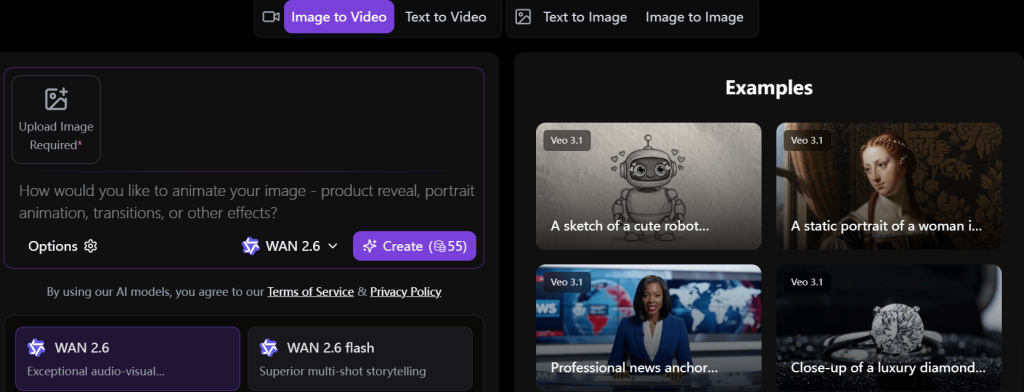
Why Users are Moving Toward No-Sign-Up Tools
People generally have no problem signing up for services if they gain something out of it. If an app provides enough value, users will sign up, and for a good reason. They want a tool that gives them features, is intuitive, and is reliable.
However, the problem always seems to begin before the value is offered. In fact, many AI image-to-video platforms are now putting up barriers by asking for email verification, passwords, credit card details, and other forms of payment before allowing users to generate a single video. This creates a type of barrier that interrupts the user’s creative process. What users really want is incredibly simple. They want to upload an image, input a prompt, and, quite literally, see what comes of it.
Users want to test tools with no barriers, no signup, no obstacles, and no promises. That’s where the appeal of a no-sign-up AI image-to-video generator becomes appealing to users due to the zero-barrier philosophy. This is particularly appealing for a tool that is so simple to use and so fast.
Privacy Concerns Most Users Don’t Ignore Anymore
The main reason for concern is not so much the barriers to sign up, but the barriers to entry that exist once a user account is created.
Many platforms do not clearly explain how their data policies work, and that ultimately leads to users making their own educated guesses as to what is happening with the tool. Naturally, people have a lot of concerns when they are in the dark. Some questions that stem from that concern include the following:
- Will the images I upload remain stored permanently?
- Will the input prompts remain persistent and be tracked over time?
- Will the images and prompts I upload and input be used in the training and/or creation of future AI models?
- Will the actions I perform on the tool be used in a way that will be associated and linked back to me?
Even if a creative tool has good policies, combined with so much uncertainty, it creates a very bad user experience.
With tools that allow users to upload personal images, the uncertainty becomes even worse.
Uploaded Images Don’t Always Disappear After Generation
AI relies on uploaded content to form a video. That cannot be disputed. What becomes unclear is what happens to the content after the video is generated. Uploads might be saved temporarily for performance. Other times, they might be saved for moderation, debugging, and improving the AI model.
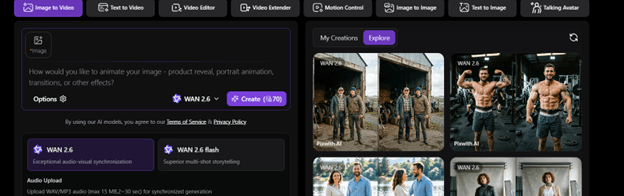
The real issue here is that most users do not know how long uploads are saved and if or when they are allowed to delete the uploads. The uncertainty would be problematic for someone uploading personal work, client visuals, or private concepts. A small amount of uncertainty is enough for users to change how they use a tool.
Prompt History Creates Another Layer of Concern
Once a user creates an account, every request is likely to be tightly coupled with the user’s identity when the request is saved.
For most casual users, this is a small issue. For users working on personal or experimental ideas, this feels much more sensitive. Most users do not want every request permanently saved. They would like the freedom to create today and literally forget about what they just did tomorrow.
Tracking Goes Beyond Just Prompts and Images.
When an account is created, in addition to content being saved, metadata is collected. Metadata describes the user’s underlying behavior.
This metadata might consist of how often the user accesses that feature, what prompts they entered, what feature they accessed, and how much time they spent on the site. When used individually, most forms of metadata are not harmful. Together, those details can create a surprisingly detailed picture of user behavior.
That’s where some users slow down. It’s not like they all have a secret to hide, but they don’t think it’s all that necessary to constantly be monitored just to create a quick video.
Sensitive Content Makes Privacy Even More Important
Privacy becomes even more important when dealing with sensitive materials. When users are working with private or sensitive materials, they begin to notice privacy concerns more. This doesn’t necessarily have to be something extreme. It can be things like:
- Personal pictures
- Ideas for private projects
- Client Visuals
- Creative concepts in the early stages
- Artistically inspired works in progress
Therefore, users choose more carefully when deciding where to show a piece of work. When there’s no clear communication from the platforms, the safest option often feels like avoiding account-based tools altogether.
Why Platforms Still Push Mandatory Accounts
From a business standpoint, they are just a way to organize people, avoid abuse, help manage server load, and keep people coming back. However, the problem is that they are already doing too much.
When sign-up is required to even try the tool, it creates a disconnect between what the users want and what the platforms want. Users want flexibility and clarity. Creators want reliability and order. This is what creates friction.
What Users Actually Look For In Privacy-friendly Tools
When users are evaluating tools, especially AI tools, there’s an emphasis on the output of the tool. More importantly, they want to see how the tool controls and manages their data. Most people use tools that mostly:
- Use data responsibly
- Give quick access that doesn’t require much
- Allow their users to manage the data that is saved and offer easy ways to delete data.
Transparency can sometimes be favored over features that are complicated. Users can build their trust in tools if they understand the things happening behind the scenes.
Control is becoming a basic expectation for many users. The ability to remove uploads or manage a user’s history is becoming an expectation.
AI Image-to-video Generator With Fewer Creative Barriers
Because of these concerns, most of the users now want an AI image-to-video generator with fewer creative barriers. They want a tool that does not require a sign-up and a clearer, more pleasant process. This includes:
- Less friction before creating what they want
- Less ambiguity about where the data goes
- Fewer unneeded privacy breaches
- A more focused process to create
Essentially, they want to create things the way they want and share things when they want.
Where Things are Heading
AI image-to-video tools are becoming more advanced and more regulated. With their growth, these tools are expected to meet higher safety, privacy, and operational standards.
But this also means users have a clearer understanding of what they are signing up for. The balance of expectations and trust will shape the future of these tools.
Conclusion
There is a growing interest in no-sign-up AI image-to-video generators. This is more than a desire to get out of signing up for things. It shows a growing understanding of the need to protect personal privacy and the need for more freedom to express creativity.
People are now more hesitant about what kind of content they upload and what kind of personal data they exchange for simplistic, creative tools. As we said, the problem is not mandatory accounts but the absence of clarity around the happenings after signing up. While clarity attracts user engagement, the absence of it pushes users to seek out alternatives that feel clearer, lighter, and more respectful of their time and data.
Choose tools that reduce unnecessary friction, respect user privacy, and clearly explain how your data is handled from the start.