
The AI video generation industry has long been dominated by closed, proprietary models. The most advanced systems were typically available only through paid platforms or APIs, leaving businesses and developers unable to access model weights, customize performance, or deploy models according to their own needs.

That landscape is beginning to change.
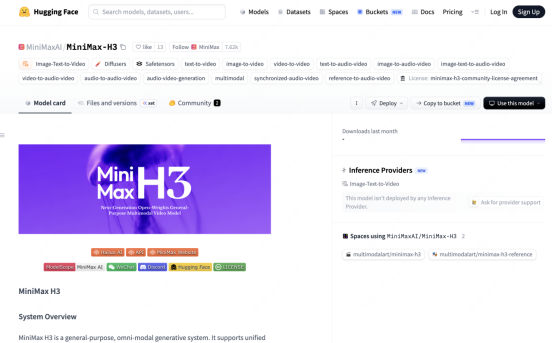
On July 31, MiniMax introduced H3, its latest flagship video generation model, and later announced that the model weights would be open-sourced. This move represents a significant shift in the AI video ecosystem: a frontier-level video model is becoming available not only as a service, but as a technology platform that developers and companies can build upon.
Could MiniMax H3 become the “DeepSeek moment” for AI video generation?
What Is MiniMax H3?
A general-purpose AI video model is designed to understand multiple types of creative input, including text, images, audio, and existing videos, and transform them into dynamic visual content.
According to MiniMax’s public information, H3 can process different creative materials and user instructions to generate videos up to 15 seconds long, with resolutions reaching 2K and native stereo audio support.
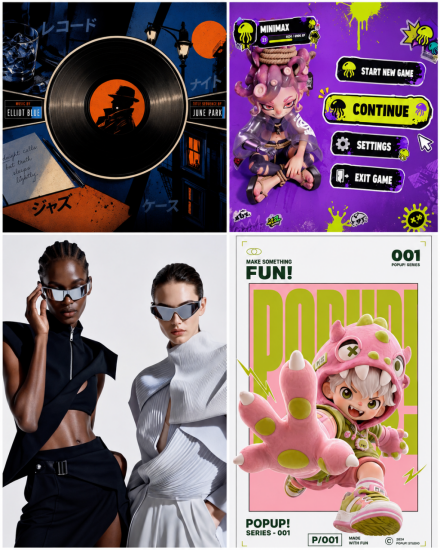
Unlike early AI video demonstrations focused mainly on generating impressive cinematic clips from simple prompts, H3 appears to focus more on practical content production workflows.
Examples include:
- Film-style opening sequences
- Game interface animations
- Dynamic advertising visuals
- Product marketing videos
- Video enhancement with subtitles and visual effects
These applications may appear less dramatic than “one sentence creates a Hollywood scene,” but they are closer to the real needs of businesses producing content every day.
Why Open-Source AI Video Models Matter
The most important part of H3 is not only its generation capability, but MiniMax’s decision to release model weights.
Previously, many powerful video models were available only through websites or APIs. Users could generate content, but they could not access the underlying technology.
This created several limitations:
- Companies depended on external pricing models
- Customization options were restricted
- Businesses could not fully control their workflows
- Developers had limited opportunities to build specialized applications
With open weights, the situation changes.
Companies can potentially:
- Deploy models on their own infrastructure
- Fine-tune models using proprietary data
- Adapt models for specific industries
- Build customized creative tools
For example, an e-commerce company may want consistent product styles across thousands of videos. A game studio may need stable virtual characters. An advertising agency may require specific brand aesthetics.
A customizable AI video model provides more flexibility than a simple generation service.
H3 vs Closed AI Video Models: A New Competition Begins
Over the past year, AI video models have improved rapidly. However, the most advanced systems have mostly remained closed.
Leading models such as Seedance 2.5 have demonstrated strong capabilities, but users typically interact through platforms or APIs rather than accessing the model itself.
MiniMax H3 introduces a different approach.
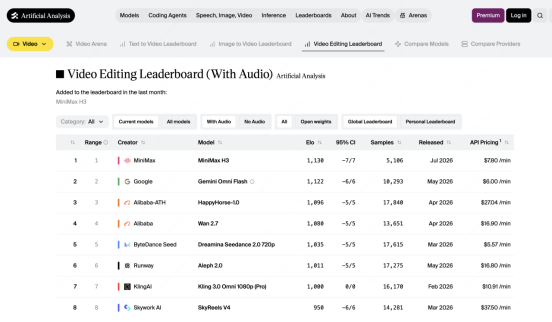
Early comparisons from AI creators have tested H3 against leading closed video models using similar prompts and source materials.
In areas such as:
- Cinematic video generation
- Complex text rendering
- User interface animation
- Video editing workflows
H3 has demonstrated competitive performance.
One important capability is its ability to understand the relationship between text and visual elements.
Instead of simply adding random letters or subtitles, the model can integrate:
- Typography
- UI elements
- Visual effects
- Scene composition
into a more complete design.
This suggests AI video models are evolving from simple content generators into tools that participate in the entire creative production process.
Why Text Rendering Is a Major AI Video Challenge
Generating readable text inside videos may seem simple, but it is one of the difficult challenges for AI systems.
A model must simultaneously understand:
- The meaning of the text
- The location where it should appear
- The relationship between text and objects
- Motion consistency across frames
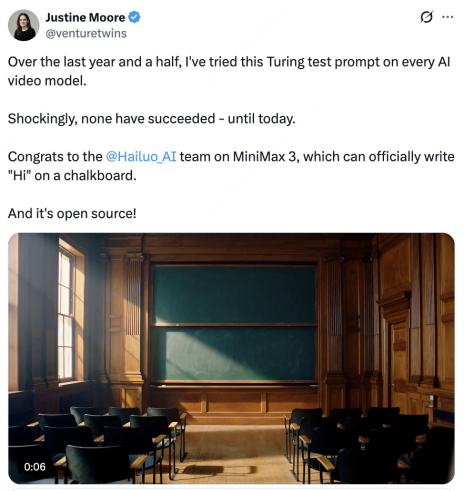
For example, generating a person writing “Hi” on a blackboard requires the AI to maintain:
- Human movement
- Hand position
- Writing direction
- Spatial relationships
- Correct letters
According to testing shared by a16z partner Justine Moore, previous video models struggled with this type of task, while H3 successfully completed it.
Small tasks like this reveal whether a model truly understands video environments rather than simply creating visually attractive frames.
Two Different AI Development Paths
The rise of MiniMax H3 also highlights two different approaches to AI development.
In the United States, many leading AI companies continue to protect their most advanced model weights while offering access through products and APIs.
However, open-weight models also exist. Examples include Meta’s Llama family and other developer-focused releases.
China’s AI ecosystem has increasingly embraced another strategy: open models as a way to accelerate adoption and build larger developer communities.
Companies including DeepSeek, Alibaba’s Qwen, and MiniMax have expanded open-source efforts across different AI categories.
The fundamental difference is simple:
Closed models provide access to a service.
Open models provide access to technology.
How Open AI Video Models Could Impact Businesses
The next stage of AI video competition may not only be about which model produces the most impressive demo.
The bigger question is:
Which models can become part of real business workflows?
Different industries have different requirements.
E-commerce
Businesses may need:
- Consistent product appearance
- Brand-specific visual styles
- Automated marketing videos
Advertising
Creative agencies may require:
- Fast campaign production
- Custom visual identities
- Flexible editing workflows
Gaming
Studios may focus on:
- Character consistency
- Interactive storytelling
- Virtual environments
A single general model may not perfectly solve every industry problem.
Open-source models allow companies to customize AI systems based on their own data and production requirements.
Challenges Ahead for Open-Source AI Video
Open-sourcing model weights is only the first step.
Several challenges remain:
Deployment Cost
Video generation requires significant computing resources. Running advanced models locally may still be expensive.
Hardware Compatibility
Successful adoption depends on optimization across:
- GPUs
- Cloud platforms
- AI infrastructure
Developer Ecosystem
The real value of open models comes from the applications built around them.
The future success of H3 depends not only on MiniMax, but also on:
- Developers
- Cloud providers
- Hardware companies
- Creative professionals
A strong ecosystem is what transforms a downloadable model into a widely used technology.
Will MiniMax H3 Become the DeepSeek Moment for AI Video?
It is still too early to know.
Open-source availability does not automatically guarantee widespread adoption. Businesses must evaluate:
- Performance
- Cost
- Reliability
- Integration difficulty
However, MiniMax H3 has already achieved something important.
It has introduced a new choice into the AI video market.
The influence of open-source AI models, which began strongly in language models, is now expanding into video generation.
From DeepSeek to MiniMax H3, the AI industry may be entering a new phase where open models play a larger role in shaping the future of creative technology.