
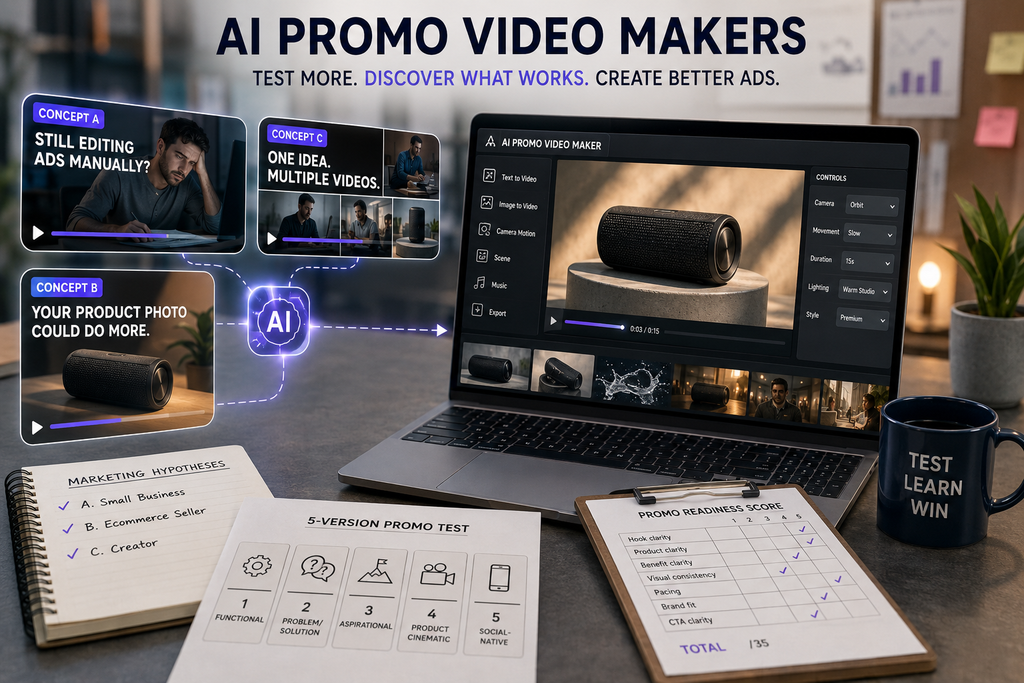
You have one product, several potential selling points, several audiences, and no real certainty about which hook deserves the campaign budget. The traditional way to find out — producing five genuinely different promo concepts — means five scripts, five storyboards, five edits, and five rounds of revisions. That’s the actual reason most brands run one idea instead of testing several.
An AI promo video maker changes that math, but not in the way most people assume. It’s not “I can make a video faster.” It’s “I can afford to be wrong five times before deciding what the final video should be.”
The Old Promo-Video Workflow Forces You to Make Decisions Too Early
The traditional sequence goes briefly, then concept, then script, then storyboard, then shoot, then edit, then revisions, then publish. The problem is that the hook, the visual style, the pacing, the product angle, the audience, and the CTA all get locked in before anyone’s actually seen them in motion.
Production cost creates creative conservatism. When every alternative costs real time and real money, teams naturally produce fewer alternatives — not because they lack ideas, but because testing five of them was never affordable in the first place. That’s the constraint AI actually removes.
My Better Workflow: Treat Every Promo as a Hypothesis
Before generating anything, I write out a single sentence: audience, plus problem, plus promise, plus proof, plus action. For example — busy freelancers, losing time preparing social content, generate promotional videos faster, demonstrate the workflow visually, try the tool.
Then I turn that into a few competing hypotheses instead of one settled direction.
| Concept | Audience | Main Hook | Promise |
| A | Small business | “Still editing ads manually?” | Save production time |
| B | Ecommerce seller | “Your product photo could do more.” | Turn images into promo clips |
| C | Creator | “One idea. Multiple videos.” | Produce more creative variations |
Even without touching a generator, writing this table out tends to surface which hook is actually worth testing first — and it’s often not the one that felt strongest when the idea was still just floating around in a meeting.
The Experiment I Recommend Running With an AI Promo Video Maker
I picked one ordinary product — a wireless speaker works fine for this — and kept it constant across every test. Only the marketing concept changed.
Promo #1 — Lead With the Problem
Show the frustrating situation first, then bring in the product as the resolution. What I checked for: does the problem register immediately, does the product show up soon enough, does the whole thing feel like a natural sequence rather than two unrelated halves stitched together.
Promo #2 — Lead With the Product
Open on a visually strong product shot, demonstrate the main benefit, close with the offer. Here I checked whether product identity held up through the motion, whether the camera movement added something or just distracted, and whether the result felt premium or generic.
Promo #3 — Lead With the Outcome
Instead of describing features, show what life looks like after using the product. Not “this app automatically creates marketing content” but a marketer finishing tomorrow’s campaign while everyone else is still stuck editing. This is really testing aspirational selling against functional selling, and the difference in how each one lands is bigger than I expected going in.
Running all three side by side, on the same product, made something obvious that’s easy to miss when you only ever produce one version: the “right” concept depends entirely on the audience, not on which execution looks the most polished. The problem-led version did better with an audience that already knew they had the pain point. The outcome-led version did better with an audience that hadn’t fully articulated the problem yet. Neither one is a universally stronger promo — they’re answers to different questions.
What I Learned: Prompting a Promo Is More Like Directing Than Describing
Weak prompts describe objects — “create an advertisement for a black wireless speaker.” Better prompts describe shots and actions: “Matte-black wireless speaker centered on a concrete pedestal. Camera slowly orbits clockwise. Warm directional studio lighting produces controlled highlights across the grille. Premium electronics commercial. Keep dimensions, buttons and grille pattern unchanged.”
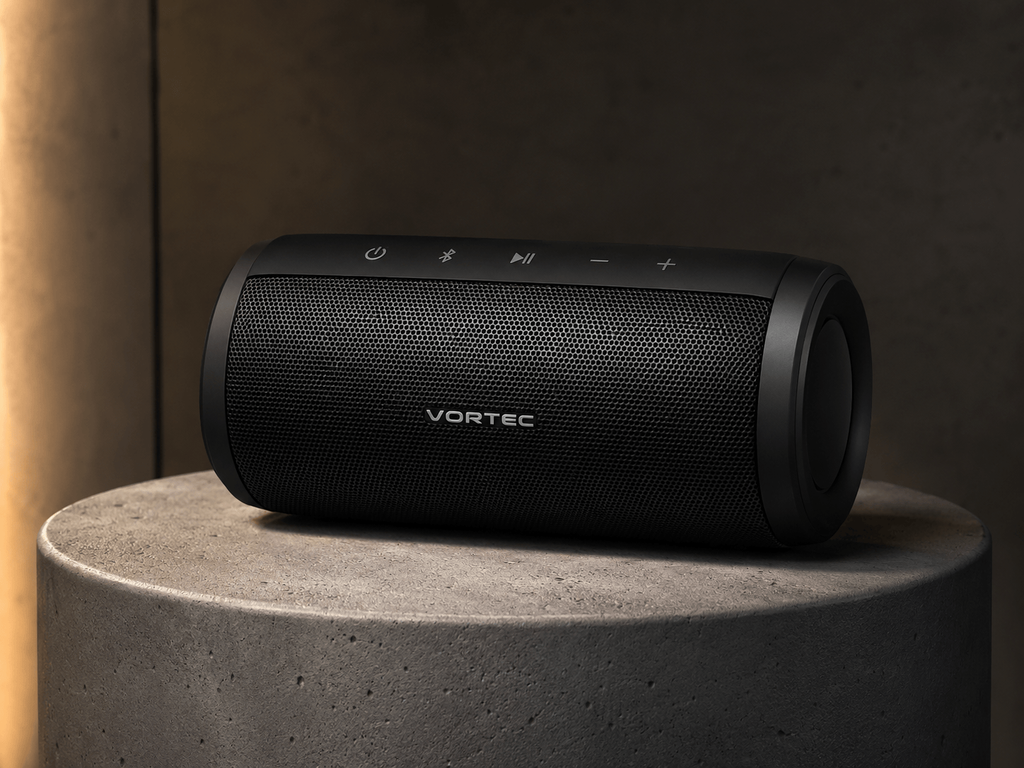
A formula I keep reusing: subject, action, camera, environment, lighting, constraint. Subject: wireless speaker. Action: stationary product. Camera: slow clockwise orbit. Environment: concrete studio pedestal. Lighting: warm directional light. Constraint: maintain logo, buttons, and dimensions. That constraint at the end has saved more clips than any other part of the formula.
The Most Important Promo Variable Isn’t Visual Quality — It’s the First Three Seconds
A cinematic video can still be a weak advertisement. For each concept, I generated a few alternate openings just to compare against each other directly.
Hook A, problem: “Creating another product ad shouldn’t take your entire afternoon.” Hook B, curiosity: “What happens when one product photo becomes a commercial?” Hook C, outcome: “Your next product campaign could start with one image.” Hook D, contrarian: “Stop making one promo video.”
Same product, same visual quality, four completely different opening lines — and the openings mattered more to how the whole thing landed than any camera choice did.
Why I Used Pixwith for This Workflow
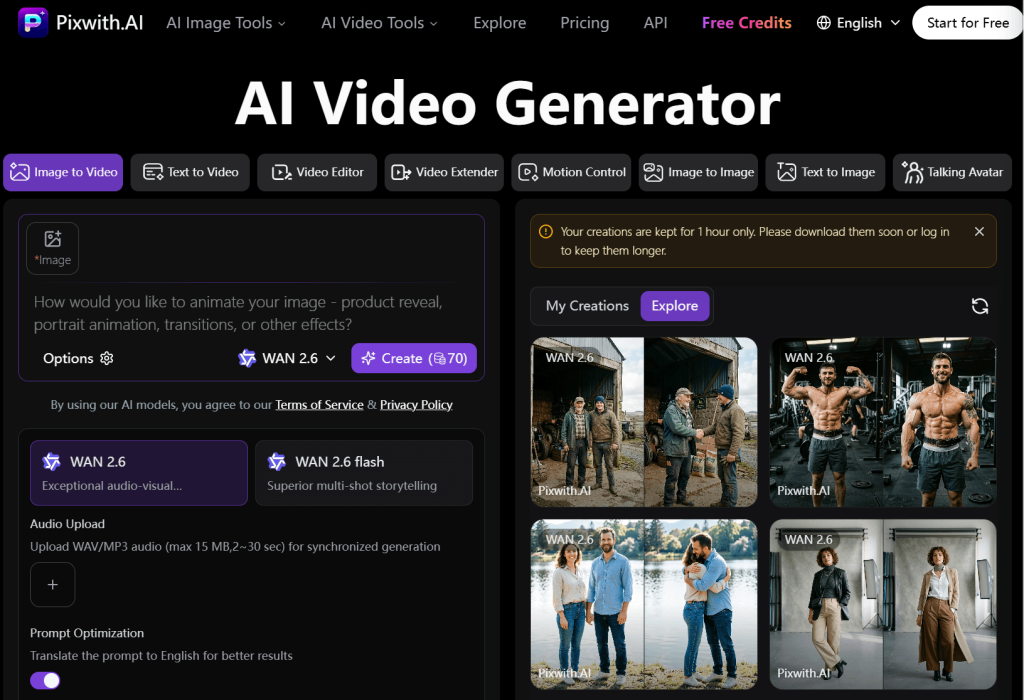
What made Pixwith useful in this experiment wasn’t just generating the first clip. It was being able to explore different visual treatments without turning every new idea into its own production project. I used it specifically because I wanted to see how quickly I could move from one marketing hypothesis to several visually distinct executions — text-to-video for concepts that didn’t have a starting image, image-to-video when I needed to stay anchored to the actual product photo, and enough control over camera movement and scene direction that the different concepts didn’t all end up looking like the same video with a different voiceover.
Don’t Ask AI to Make “A Better Ad” — Change One Variable at a Time
If everything changes at once between generations, you don’t actually learn anything from comparing them. So I forced myself to hold most of the video constant and change one thing per version — same product and same hook with a different camera movement, same product with a different hook but the same visual treatment, the same concept with a different emotional tone, the same video with a different CTA. AI makes experimentation cheap. It doesn’t automatically give you experimental discipline — that part’s still on the marketer.
A Practical 5-Version Promo Test
Version 1, functional: show what the product does. Version 2, problem/solution: frustration followed by resolution. Version 3, aspirational: the desired outcome, not the feature list. Version 4, product-cinematic: minimal narrative, maximum visual desire. Version 5, social-native: casual pacing and composition, deliberately less polished than a conventional ad. Comparing all five side by side tells you more about the product’s actual selling point than any single version ever could on its own.
Score the Videos Before Spending Money on Them
I run every finished video through what I call a promo readiness score — one to five points on each of seven questions.
| Criterion | Question |
| Hook clarity | Do I understand why I should watch? |
| Product clarity | Do I know what’s being promoted? |
| Benefit clarity | Do I understand why I should care? |
| Visual consistency | Does the product remain believable? |
| Pacing | Does anything drag? |
| Brand fit | Could this plausibly come from this brand? |
| CTA clarity | Is the next action obvious? |
Thirty-five points total. The point isn’t to pick whichever clip is prettiest — it’s to pick whichever one communicates fastest. Those aren’t always the same video.
Where AI Promo Video Makers Actually Save the Most Work
Product-launch concept exploration — testing several positioning directions before a launch instead of betting on one.
Ecommerce creative refreshes — keeping a successful ad concept from going stale by generating new variations on the same idea.
Seasonal promotions — reusing the same product assets while changing the surrounding campaign environment.
Organic social — turning marketing ideas into lightweight visual experiments without a full production cycle behind each one.
Landing-page videos — testing different ways of demonstrating the same product.
Client pitches — agencies showing an actual concept instead of describing one in a deck.
Where AI-Generated Promo Videos Still Need Human Judgment
Product details can drift. AI sometimes invents objects that were never part of the brief. Hands and on-screen text can be unreliable. Too much motion can make a product feel less real, not more premium. Visual polish can’t rescue a weak positioning idea. AI has no idea which customer objection actually matters most to a real buyer, and any claim it generates still needs a person to check it against reality.
AI can generate twenty executions of a bad marketing idea just as efficiently as twenty good ones. It doesn’t know the difference. The marketer still has to choose the strategy.
None of this is really a knock against the tool. It’s closer to the same limitation any production team has always had — a camera crew will happily shoot a weak script beautifully. The difference is that a weak script used to cost a full production cycle to discover. Now it costs one generation, which is exactly why the scoring step matters more than it might seem to at first glance.
The Three Things I’d Check Before Publishing Any AI Promo
Product fidelity — logo, shape, packaging, interface, colors, and any physical detail that matters to the brand.
Marketing accuracy — never let AI-generated visuals or narration imply a capability the product doesn’t actually have.
Commercial coherence — would a customer understand what’s being sold without having read the prompt that generated it? If not, it gets regenerated or edited before it goes anywhere near a campaign.
My Recommended AI Promo Workflow
Define one audience. Identify one problem. Write three competing hooks. Generate three concepts in Pixwith. Keep the strongest one. Create three to five controlled variations of it. Score them. Publish or test the strongest versions. Feed the real performance data back into the next creative cycle.
The shift that matters isn’t using AI to make one promo faster. It’s using AI to discover which promo actually deserves to become the campaign.
Final Takeaway — AI Changes the Cost of Being Creatively Wrong
Marketers used to try to find the right idea before production started, because production was too expensive to run more than once. AI promo generation flips that — you can find the right idea through production instead, by actually watching several versions compete against each other before anything gets real budget behind it. That’s the bigger change here, not the speed.
Pixwith ends up being less of a video-production shortcut and more of a practical environment for testing hooks, concepts, visuals, and messaging variations before committing real campaign resources to any of them. Try taking one product and generating three completely different promotional concepts instead of asking for one “perfect” ad — the comparison is usually worth more than the first render ever is on its own.