
Gone are the days when video production usually takes weeks to be completed.
With AI, you can now produce videos as fast as you never would have imagined back then.
AI tools like the Alibaba Wan series are a good example of that.

Wan 2.1, 2.2, 2.5, and 2.7 are making it easy for creators to turn their ideas into videos quickly.
Even though early versions of Wan could create videos, there were still problems with the creation.
And with updates from Wan 2.1, 2.2, 2.5 to Wan 2.7, you could create better videos of good quality faster with improved motion and better understanding of prompts.
This AI will serve as a support and help you create without technical limits.
Certainly, AI isn’t supposed to replace your creativity. It still needs your ideas and your prompts.
In this article, my focus is to help you see what changed in AI video production, especially as you learn the differences between Wan 2.1, Wan 2.2, Wan 2.5, and Wan 2.7 models.
So, What Changed For AI Video Production?
What changed for AI video production isn’t far-fetched. We see that AI video production has improved within a short time.
And it’s not just about the videos looking much better today. The technology behind the magic is much smarter.
Earlier tools usually guess what pixels look like. They also struggled with realistic motion, specific scene detail, and object consistency.
But that’s not the case with improved AI video systems. They now understand how people, objects, and even scene details should be.
Pinggy’s 2026 study on AI video generation tools says the latest AI video models can now understand video as a continuous sequence rather than a set of separate images.
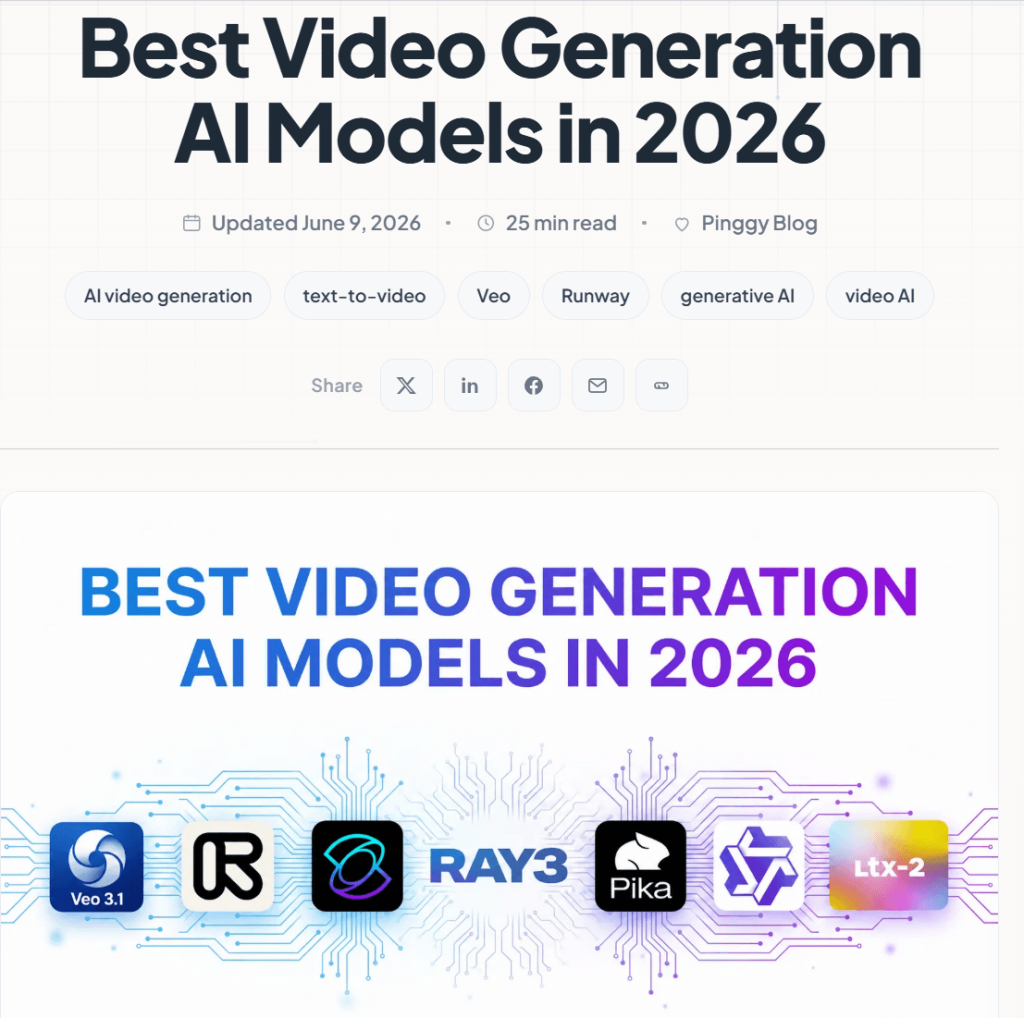
As a content creator, this means these improvements can help you generate custom videos that closely fit your needs. No more spending hours looking for stock videos online that almost match your idea.
Also, some years back, you’d need expensive equipment, a professional team, and hours of editing time to create just one good-quality video.
But today, AI video models can create all you need faster. That’s why 45% of creators have now added it to their daily workflow, according to the WifiTalents Creative Economy Report.
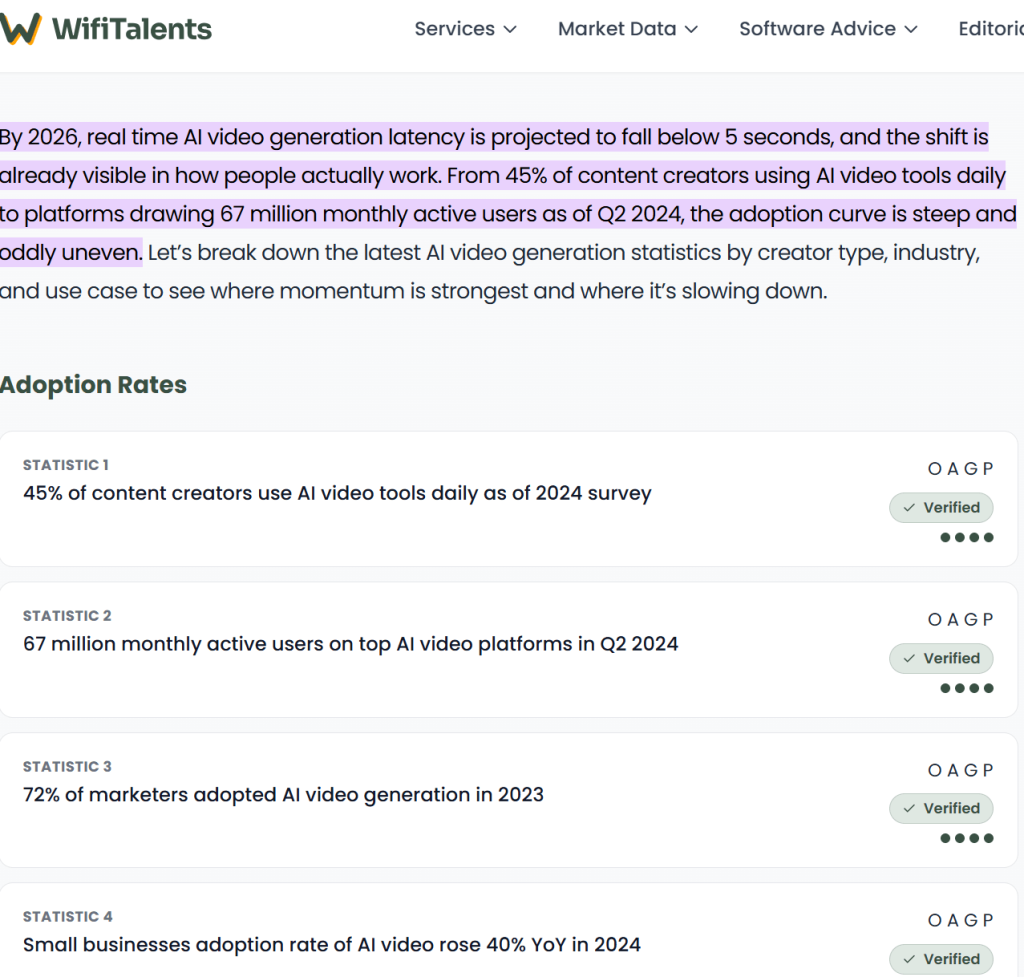
They use these tools to plan scenes, create b-roll footage, and test ideas before starting full production.
So, the possibility of the idea in your head becoming a finished, professional-looking video is now more real than ever. You just need to have the right prompts and tools.
A Quick Look at What You Can Do With The Wan Series
Before now, the Wan series was a simple video generation tool that allowed you to create videos from simple text prompts.
Now, it’s a much broader video workflow. It has come a long way.
Today, it has several features that help you create videos exactly the way you want.
The challenge is that the upgrade to newer versions has created a selection problem.
This is because users think that the latest version (Wan 2.7) is the best choice. But that’s not the case.

Each Wan model was created for different tasks. They don’t all solve the same problem.
What you want to create will determine which model to use.
This is what I mean:
- Wan 2.1 is best for basic text-to-video tasks when you just want to create simple clips without many extra controls.
- Wan 2.2 works well if you need simple first-and-last-frame control.
- Wan 2.5 is a good choice for short videos with audio support and 480p output.
- Wan 2.7 offers the most features and flexibility, making it standard for creators who want maximum control over their AI video projects.
The Evolution of AI Video Creation: How The Wan Series Differs
Having seen how AI video generation has evolved and improved so fast in the shortest time, let’s compare the Wan series, Wan 2.1 vs Wan 2.2 vs Wan 2.5 vs Wan 2.7, and see how they have evolved.
Wan 2.1: The Open-Source Foundation
Wan 2.1, also known as WanX 2.1, is an open-source AI model by Alibaba.
It supports using text and image prompts to generate high-quality, realistic content.
Compared to previous models, Wan 2.1 has improved multimodal capabilities. This enables users to create and edit videos with text or image inputs.
Also, it supports multi-scenario image generation, such as image-to-image, text-to-image, virtual models, sketch-based drawing, and personal portraits.
These varieties provide options to satisfy various artistic creation needs fully.
This model has two main versions to help different hardware setups.
- The first is the simple 1.3B parameter version. It allows creators to generate 480p videos on standard consumer graphics cards in just a few minutes.
- The second is for production-grade quality. And it’s the larger 14B parameter model. Its higher resolutions of up to 720p produce a far better physical rendering.
Key Features
- Multi-Task Support: It supports text-to-video, Image-to-video, video-to-video editing, text-to-image generation, and video-to-audio generation.
- Bilingual Video Model: It can generate videos in both Chinese and English. It has wider text-generation capabilities that make it possible.
- Outstanding Efficiency and Accessibility: You can use the smaller 1.3B model to create a 5-second video in about 4 minutes using an RTX 4090.
- Open-Source Access: You can get it on Hugging Face and GitHub. This makes it easy for developers to access it.
- Benchmarks Performance & Quality: its 14B parameter model scored the overall highest in the Wan-Bench tests.
Wan 2.2: Practical & Affordable Open-Source
If the previous version proved that open-source video could look great, this update focused on making it practical and affordable for everyday use.
Wan 2.2 was released in July 2025 by Alibaba. It’s also an open-source AI video generation model.
Its level of video creation from text prompts or images rivals commercial tools.
Wan 2.2 uses a Mixture-of-Experts (MoE) system, and it has 27 billion parameters in total.
But it can only use 14 billion at a time when creating a video. This helps it work more efficiently and use less computing power.
Because of this design, it can run on powerful consumer graphics cards like the RTX 4090, which is impressive for an AI model with so many capabilities.
Wan 2.2 is different because of its open-source license. You can use it to create a 5-second video within 9 minutes at 720p resolution.
Key Features
- Text-to-Video Generation: It uses a text-to-video model to convert text prompts into videos. Wan 2.2 handles complicated scene descriptions well. Its prompt compliance is strong.
- Image-to-Video Generation: Wan 2.2 can make static images come alive. With just one image upload, it can generate a video that goes beyond that moment with real movements and camera movement.
- Hybrid Text-Image-to-Video: The Wan 2.2 model also accepts both text prompts and images simultaneously to create a video. This flexibility makes it useful for different creative workflows.
- Multi-Resolution Support: With Wan 2.2, you can generate video with different resolutions, including 480P and 720P.
Wan 2.5: Where Native Sight and Sound Meet
Until this point, there was still a lot of work to be done after creating an AI video with the previous models.
You still had to take your clip into traditional editing software, generate a separate AI voiceover, and try your best to match the audio tracks to the visual timelines.
Wan 2.5 is a multimodal AI model from Alibaba. In early 2025, the Wan model series began with version 2.1, then 2.2, and then 2.5 later that year.
This Wan 2.5 model changed the system by introducing an all-in-one generation process that treats audio and video as a single unit.
When you type a prompt into this version, it generates visuals, matching sound effects, background music, and even conversation with proper lip-syncing at the same time.
The model delivers resolution up to 1440×1440 for images and 1080p for video.
This version worked very well for social media marketers, podcasters, and independent filmmakers who need to create and share videos quickly without wasting time.
Key Features
- Multiple Generation Modes: It supports multiple generation modes like text-to-images generation, text-to-video generation, image-to-image transformations, or animating static images into short video clips.
- Strong Prompt Adherence: The model follows instructions accurately. This gives you control over the output when doing a professional job.
- Improved Video Generation: You can generate videos of 10 seconds long. It understands cinematographic language. You can indicate specific camera movements like zooms and tracking shots. It also offers multiple resolution options: 480p, 720p, and 1080p.
- Native Audio Generation: This model creates video and audio at the same time. It can automatically add sound effects, background music, matching voiceovers, and ambient audio that match what is happening on screen.
Wan 2.7: The Most Advanced Version
Lack of precise control has been the major complaint with other versions. Alibaba Wan 2.7 is the latest upgrade that tackles that.
It’s not just a better version, it’s a better workflow.
It was publicly released in late March 2026. This model gives you specialized control, letting you act like a true director.
Wan 2.7 can generate a 15-second 1080P video using text-to-video and image-to-video, and it comes with built-in native audio output.
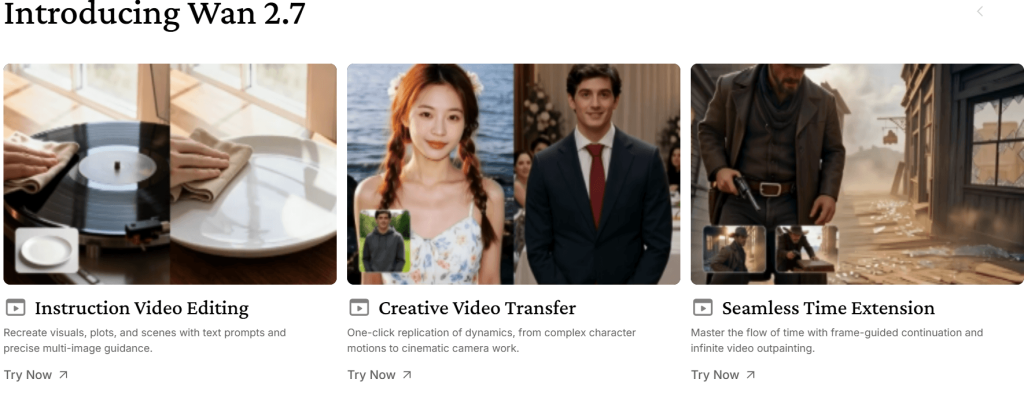
Compared to previous versions, it adds endpoint anchors, multi-reference grids, and instruction-based editing.
Key Features
- First-and-Last-Frame Control: Once you feed it the first and last frames, the model generates everything in between. This gives you precise control over where a shot starts and ends.
- Video-to-Video Editing: This is one of Wan 2.7’s major capabilities. Give it an existing video and describe the changes you want. It’ll make the changes while preserving the original video structure and camera path.
- Subject Referencing: This model can maintain a consistent visual identity throughout the entire video by just feeding it a reference image of an object, character, or person.
- Improved Camera Motion Control: Compared to Wan 2.1, Wan 2.7 provides precise control over how the camera behaves. And it adheres well to specified movements.
- Text-to-Video Quality Improvements: Wan 2.7 performs better at adhering to prompts, producing natural motion, and rendering details. It can handle difficult scenes with multiple subjects effectively.
Conclusion
After looking at the different Wan series, you can see what changed for AI video production.
The Wan 2.1 proved that AI video creation was possible, and then the Wan 2.2 model improved stability.
Wan 2.5 delivered an all-in-one generation process that treats audio and video as a single unit.
The latest version of Wan 2.7 brought a better workflow.
But the key improvements were mainly in areas that affect the quality of the videos you create, such as better prompt understanding, realism, motion quality, and character consistency.
Note that these advancements in AI video generation don’t replace the need for human judgment. It rather follows your judgment.
Whatever you prompt, it is what the output reflects.